Your team is already using AI to write reports. Copying a paragraph out, pasting it in, tidying it up, with no agreement on what's allowed and no check on what comes out. It's inconsistent and not standardised. That's a training problem, and it's the one we fix.
By the end of session one, we'll have produced a draft report in your house format, from your notes, in front of your team. Not a demo — your template, your standards, your language.
By the end of the programme, your people can take site notes to a first draft, use AI to catch the carried-over paragraph and the wrong-project reference before the client does, and write to one house style across the firm.
Your reports, your style, your standards.
Two live sessions and six months of support, to make sure it sticks.
Run the numbers for your firm.
Time per report today
2 days
Time with AI
Half a day
Hours saved per report
12
At 4 reports a month
576 hours a year
That's more than 70 working days back every year, for every surveyor. Time spent on site, with clients, or on the next job, instead of formatting a document. Even if you halve those figures, training pays for itself within weeks.
What we hear from surveyors and consultants
“There's no profit in writing the report.”
The value is the inspection and the judgement. The write-up is the part everyone wants back.
Notes come in every format.
Photographed A4 sheets, iPad bullets, dictation on the drive back. Four ways in usually means four different reports out.
The first AI draft is often too much, not too little.
Surveyors tell us the technical reasoning can run slightly over the top, but it gives them a solid baseline that needs only light editing.
Remote teams drift.
Surveyors who only meet quarterly end up describing the same defect differently. Clients notice.
What works for one person needs to reach everyone.
When one surveyor finds a better way, the whole team should get it, not just whoever was in the room.
Trusted by forward-thinking teams
Scottish Building Standards Hub
Drummond Roofing Consultancy Ltd
Fife Council
Scottish Futures Trust
RSE Water Technology
Microsoft for Startups
“Skirr AI built one structured AI workflow around our template and house style, and trained the team to use it. Reports are more consistent, they take less time, and the surveyor still checks and signs off every one.”
“With Scottish Government Building Standards Division funding, we set out to build an app bringing together fragmented building standards documentation, useful websites and direct contact with local authority teams, including at key construction stages. Skirr AI turned our brief into a clear, focused and user-friendly product, in a friendly, professional and no-fuss way. They kept us engaged throughout, and we look forward to developing the app further with them.”
James Whiteford MRICS BScScottish Building Standards Hub Director (Business/Strategy/Transformation)www.sbsh.scot
“Skirr AI carried out an AI audit and AI analytics review that cut through complexity and gave us a clear, practical picture of where data and automation can add real capacity. They combined technical depth with a grounded understanding of our operations and reporting, and delivered insight we can act on while keeping the service personal and commercially focused.”
Stephen SlessorCEO, RSE
Your Report will be put into AIand scrutinised
You finish the report, the client receives it — and uploads it straight into their own AI to summarise, cross-check and query.
Mistakes that used to sit quietly in appendix C now get surfaced in seconds. Inconsistencies between sections get flagged. The tolerance your work used to enjoy is gone.
Quality Control is the real bottle neck for Report creation
Before AI training
•Hours writing the report
•Sections copied from a previous report that no longer make sense in the new report
•Images and image descriptions carried over from a different site — mismatch and confusion for the customer
•AI-generated text pasted in raw, in the wrong tone or wrong meaning
•US spelling and grammar for UK customers creeping in through the AI itself
•No two people in the firm writing the same report the same way
AFTER AI TRAINING
•Saving time writing the report — more time analysing it
•Catch carried-over sections and wrong-project references on the draft
•Catch wrong photos and mismatched image descriptions before the client does
•Site notes, photos and voice memos as inputs — we show what captures cleanly, then a first draft in your house format and tone
•Check spelling, grammar and UK English against your house standard
•One firm style across the team — judgement, rating and sign-off stay with the professional
The problem with document templates and AI.
Templates work very well but as AI is being used more and more to read documents, summarise and integrate data the old problem with templates is further exacerbated. It becomes easier to spot inconsistencies, errors, typos and mistakes.
AI can use those same templates to help improve standardisation, consistency and reduce mistakes across a team but you need to understand how AI works and get a system in place to use it.
Common issues usingAI for Report writing
In the rush to adopt AI, lots of firms just started with whatever they had—ChatGPT and Gemini. Teams used it, saw the benefits, and now you know it works well but want to take it to the next level. It's crucial at this point: you can trip yourself up. Here's what we discovered.
“Which AI should we be using?”
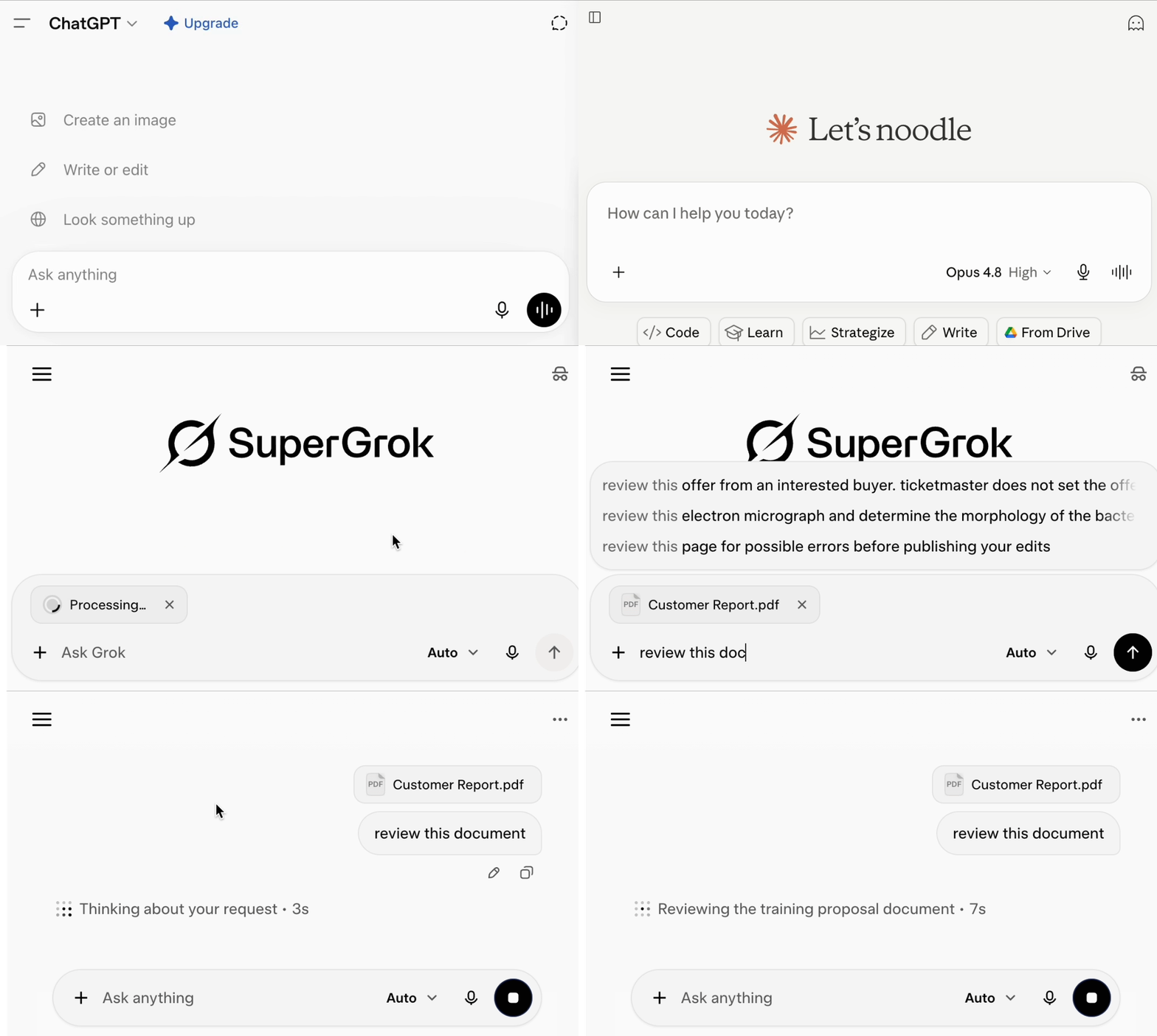
Claude, ChatGPT, Gemini, Copilot, Grok — it depends on the work, and you may already be paying for the right one. Most firms have Copilot or licences sitting unused. You need the tool to work for the report, not another project.
Half your team is using their own account
Someone's on the free tier on a personal phone, pasting in site notes — weakest protections, no audit trail. A sanctioned tool and five minutes of instruction ends it.
Free and paid are not the same product
On consumer tiers, what you type may train the model. On business tiers, it generally doesn't. Same logo, different contract — and almost nobody has checked which they're on.
Your client's data doesn't belong in a public chatbot
Site addresses, client names, sensitive findings. We cover what can go in, what must be stripped, which settings matter, and how to record the decision.
You're about to be asked about this in writing
Clients, tenders and PI insurers now ask how AI was used and controlled. Every firm we train leaves with a one-page usage policy a client or underwriter will accept.
For RICS-regulated firms, this is now a professional expectation, not a nice-to-have. We train to it.
How AI for Reports training works
We train your team on your own reports. Send us one anonymised report before the first session and we open by drafting one in your house format, live, in front of your people. Your template, your language, your standards. Not a demo on a made-up example.
Two live sessions of around three hours each, a fortnight apart, with practice on real jobs in between. Delivered online by video call, or on-site by arrangement.
The spacing is deliberate. People only keep what they use, so between sessions your team works on real reports and brings the problems back.
Session one — from site notes to a first draft
We start with your own report. Photographed A4 notes, dictation, bullets on an iPad — we show your team what captures cleanly and what needs a different approach. By the end of the session we produce a structured first draft in your house format.
The draft lands in your actual report template, ready to edit in Word or Google Docs, not stuck in a chat window. Your team leaves able to do it themselves on the next job.
Session two — QA, safety and one house style
AI as a second reader. Catching the section carried over from a previous report, the photo from a different site, the wrong-project reference, the US spelling.
The hazard sweep. A safety issue noted on site that never reached the report is a liability, not a typo. We build a check that compares your site notes against the draft and flags anything that went missing, roof by roof.
One house style. The report reads the same whoever wrote it, and references the standards you work to with citations you can check.
Where AI stops. Judgement, rating, sign-off, liability and authority stay with your professional, every time.
We work on real drafts your team produced in the fortnight between sessions.
See the workflow
From photographed site notes to a checked, client-ready report. One real workflow, start to finish.
What your firm keeps
The training ends. These don't.
You don't just learn how — we build it with you, live, and hand it over.
Your own AI skills. Custom tools built around your report types: notes to first draft, hazard sweep, QA check. Your team runs them in one click, every time.
A shared project for the whole team. Your templates, house style and standards in one place, so every surveyor's AI starts from the same brief.
Your Morning-After Notes. A plain-English playbook written for your firm after session one.
A house-style guide your team writes to, and AI checks against.
The know-how to change them yourselves. We teach your team to update the skills, so a new report type doesn't mean waiting on us.
A one-page AI usage policy a client, tender panel or insurer will accept.
Everything we build is licensed to your firm for your own work.
What we need from you
One anonymised report before session one
Your report template, if you use one
Around three hours per session from the people who actually write the reports
One named person who owns the house style and the skills — usually a senior surveyor or office manager
That's it. We set up the accounts, sort the access and handle the technical side. No IT project, no procurement, no new system to roll out.
Support between sessions
The best fixes come from real jobs. Between sessions your team sends us what went wrong — a WhatsApp message or an email is fine — and we adjust the skills before the next call.
Six months of follow-up, included
The training doesn't end when session two does. You get two follow-up sessions, at three and six months — 30 minutes each, with the same people.
New starters join. Someone hits a report type we didn't cover. A tool changes and what worked in March stops working in June. A check-in catches it before the team quietly drifts back to old habits.
Each one is short and practical: what's working, what's slipped, what's new, and one thing to fix.
Led by someone who actuallyworks inside property and infrastructure
AI experts don't understand the Built Environment. Built Environment experts don't understand AI.
We know both.
Paul Duddy
Founder, Skirr AI
Paul has spent his career in the property and infrastructure world — which is why this training sounds like your site notes and house templates, not a tech pitch. Skirr AI is trusted by Scottish Futures Trust, Fife Council and the Scottish Government's building standards programme. He teaches the same practical methods used with those clients: live on your documents, with clear boundaries on where AI stops and professional judgement begins. He has trained surveying and roofing teams on their own live reports, and built the skills they use day to day.
RICS building surveyors
Need to meet the RICS Responsible Use of AI standard?
Dedicated training for RICS-regulated building surveying practices — compliance and faster reports on your own templates.
We also work with asbestos and damp surveyors, drainage and subsidence specialists, M&E consultants, energy and retrofit assessors, architects, and building control.
Frequently asked questions
Will AI write our reports for us?
No, and you shouldn't want it to. AI drafts and checks; your professional signs off and carries the liability. We train the boundary as carefully as we train the tool.
Do we need to buy new software?
Often not. We start by auditing what you already pay for.
How long before we see a difference?
Session one produces a usable draft in your house format. The QA and consistency gains build over the following weeks, and the follow-ups keep them in place.
Can our surveyors use it on site, from a phone?
Yes. Photograph your notes, drop them in, and the draft is waiting when you're back at a desk.
Will every surveyor's report read the same?
That's the point. One house style, one structure, the same description for the same defect, whoever wrote it. Ratings and judgement stay with the surveyor.
How much does it cost?
It depends on team size — book a call and we'll give you a straight figure.
Who owns what you build?
Your firm. The skills and project are licensed to you for your own reports.
Ready to make better reports with AI?
Tell us what kind of reports you produce and how many people write them. We'll come back with a straight answer about whether training is worth it for a firm your size.